

Teaching for Biliteracy is most effective when the instructional and programmatic infrastructure reflects and supports biliteracy practices.
It is important to begin with gathering information about the students:
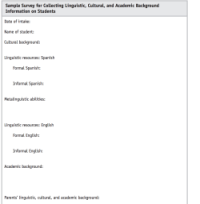
Sample Survey for Collecting Linguistic, Cultural, and Academic Background Information on Students:
Sample Survey from Chapter 2 Beeman-Urow (PDF File)
Sample Survey for Collecting Linguistic (Word File)
Schedules
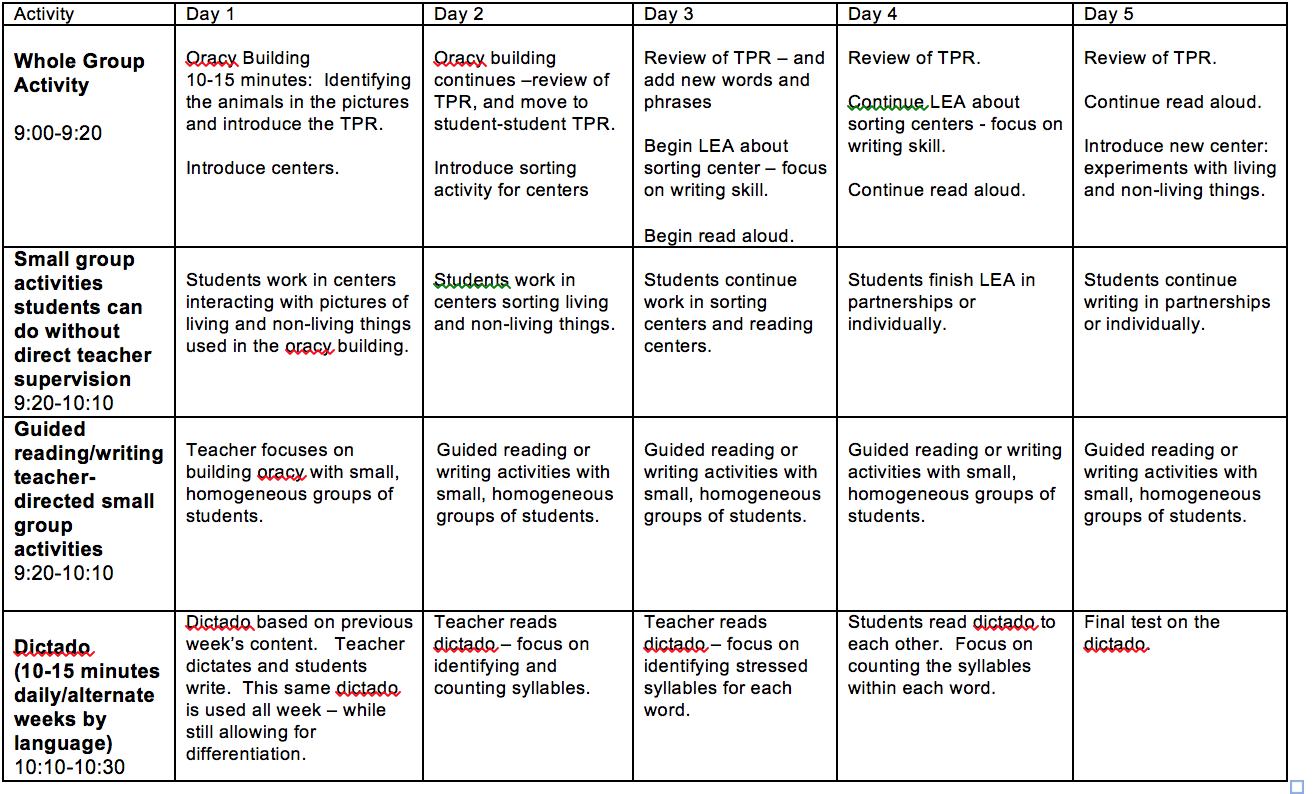
This is a Sample weekly schedule for Kinder that supports biliteracy practices. You can see a video of some of these biliteracy practices here on this website. This Template for Weekly Lesson Schedule for Teaching for Biliteracy can be dowloaded and used for planning.
Click here for some Sample Daily Schedules for biliteracy
Teaching for Biliteracy in Dual Language, Two-Way Immersion, One-Way Immersion Programs, and Developmental Bilingual Programs
Blog Interview: Creating a Strong Dual Immersion Program
In this blog interview, Karen Beeman describes the benefits of dual language, also called dual immersion, programs, along with what districts and schools need to consider in order to successfully implement and sustain these programs.
Creating a Strong Dual Immersion Program
The tools below are designed to support schools and districts in implementing a new dual language program or enriching a current program.
Defining Language Acquisition Programs:
There are many kinds of language acquisition programs. The resources below are useful in understanding the similarities and difference among the different program types.
- Power Point describing language acquisition programs and the students they serve: An overview of language acquisition programs and the students they serve
- Handout of language acquisition programs: Language Acquisition Programs Explained
You can find more information on different types of language acquisition programs by clicking on the Description of Programs page of this website.
Bilingual and Updated Version:
bilingual-decision-making-framework-for-dual-language-twi
This decision making framework is designed to be used as a working document by the members of a dual language committee. It outlines some of the critical decisions that need to be made in anticipation of creating a new dual language program, and can also be used as tool for enriching and refining an existing dual language program.
Creating and Maintaining a Dual Language Committee
This document outlines suggestions for the members and duties of a standing dual language committee.
Timeline for Creating a New Dual Language Program
This document outlines a two-year plan for researching, developing, and implementing a new dual language program.
Sample Content and Language Allocation Plans for Dual Language and Biliteracy:
- For Elementary 80/20 Programs: Sample Content Allocation Plans Dual Language, Two-Way and One-Way Immersion and Developmental Bilingual Education 80-20:
- For Elementary 50/50 Programs:
- For Secondary Programs:
In addition to language allocation (90/10, 80/20, 50/50), dual language programs need to determine their content allocation plan, which includes deciding which subjects will be taught in which program language at each grade level. Consult the documents above for sample content allocation plans for 80/20 and 50/50 programs.
“Look Fors” in Biliteracy Programs
Documents like “Look Fors” should be created by a diverse group of stakeholders from the district (administrators, teachers, literacy specialists, etc.) The process of developing Looks Fors is just as important as the final product. The use of “Look Fors” should reflect a growth mindset, and not be meant to highlight deficits. We have presented two different examples for two different programs. “Look Fors” must reflect the school or district’s local context, students, program vision, and goals, and some of they ways they can be used include:
- As “onboarding” for new staff
- As a needs assessment for professional development
- To establish short-and-long-term programmatic goals
This Sample “Dual Language Look Fors” document focuses on the 3 linguistic spaces (Spanish, the Bridge and English) and 3 areas: the classroom environment, language use, and instructional strategies.
This sample Biliteracy Checklist and Look-fors was created for North Shore District 112, in Highland Park/Highwood, IL for use in both their 80/20 two-way immersion dual language program and in their 80/20 one-way immersion dual language program.
Sample Biliteracy checklist with look-fors